
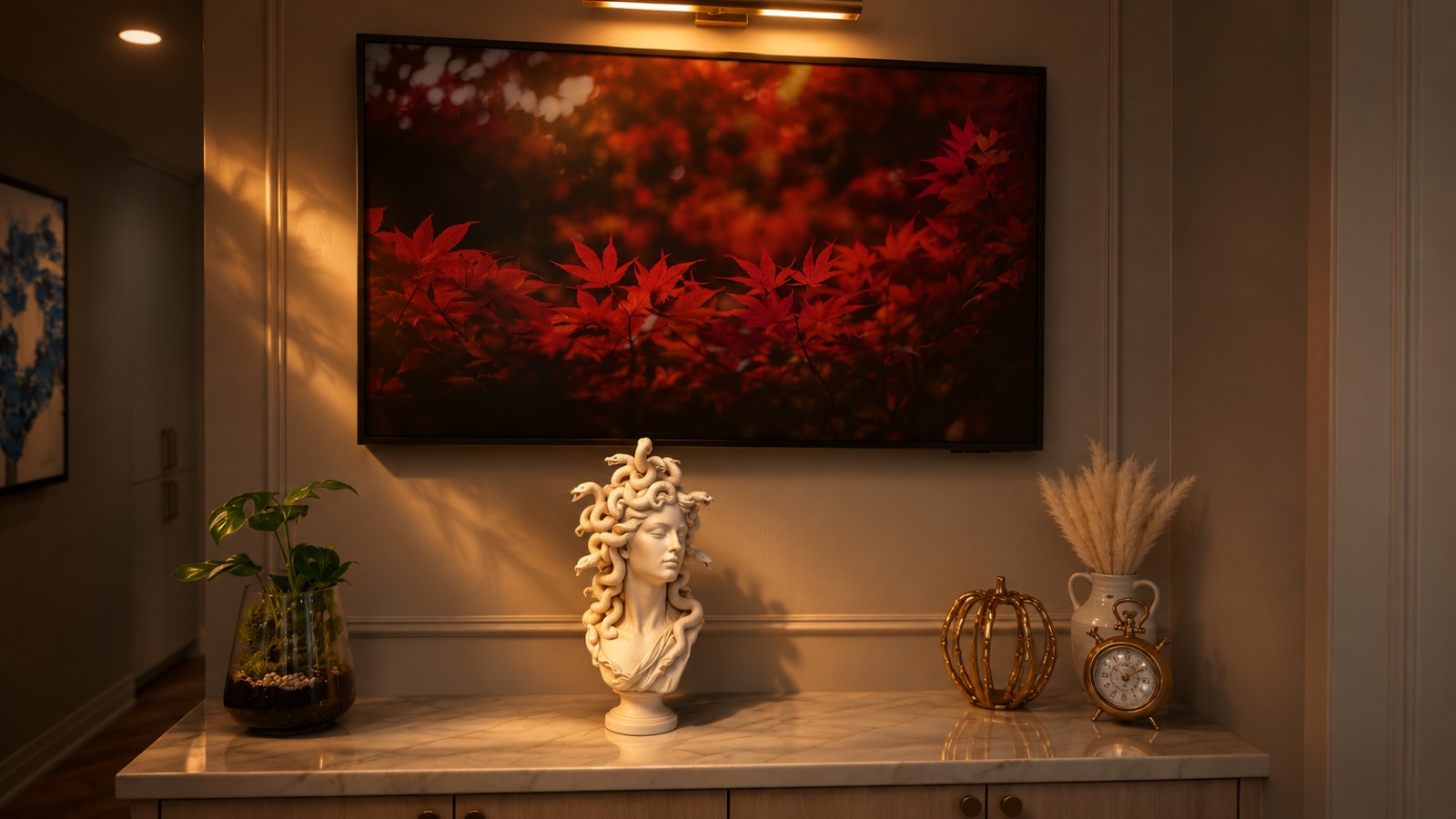
Custom sculptural forms fail for one simple reason. They look like plastic the moment someone walks close. The Medusa Bust is a dense crown of coiling snakes around a sculpted face, so every recess and support mark shows. We used SLA 3D printing to hold that detail, then finished the piece in-house with a 2K automotive matte polyurethane finish. The result reads as carved stone, not resin. It now sits at Mara Aesthetic Medicine, a working clinic, where it has to hold up to close viewing. Here is how we did it and what it means for your own project.
Have a model and a deadline? Request a quote, and we will tell you what it takes.
What the Medusa Bust shows about our work
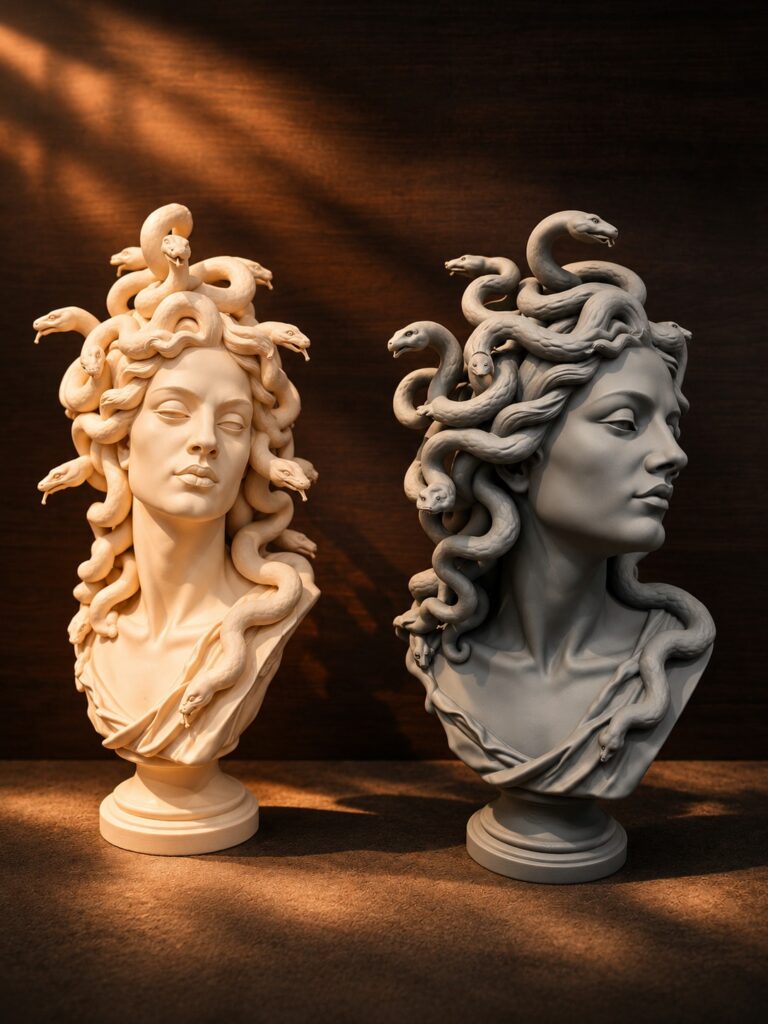
A bust crowned with snakes is a brutal test for SLA. The form is full of recesses, and each one forces a choice about supports and build orientation. Supports leave marks where they touch, so we plan where they land before printing. A larger version may also need hollowing, with drain holes placed out of sight.
3D Printing and finishing under one roof removes a real risk. A third-party painter has to guess where the thin detail sits. One heavy coat can fill the scales and soften every edge. Our print team and finishing team work together, so the detail is protected from first step to last.
Standard print lead time is one to three days. Finishing time depends on size and finish level, and we confirm it when we quote.
Who this kind of work is for
This work suits two kinds of buyers.
Commercial and B2B buyers, such as interior designers, architectural firms, and clinics, need durable focal pieces on strict schedules. A printed and finished sculpture fits because there is no mold to build and no foundry slot to wait on.
Residential and private buyers use the same route to commission custom art. A resin sculpture is lighter than solid stone or cast bronze, so floors, walls, and stairs carry less load. It also skips the long wait that casting or carving can bring. Compare quotes at the same size and mounting needs before you decide.
To see more of what we print, browse the SLA parts gallery.
Why SLA and polyurethane paint suited this part
SLA, short for stereolithography, cures liquid photopolymer resin one thin layer at a time. The ISO/ASTM 52900 vocabulary places it in the vat photopolymerization family. That layer-by-layer build is what lets a sculpture hold fine detail. Our SLA 3D printing service covers the printing side of this work.
Detail holds in deep undercuts.
Each layer is drawn precisely, so small forms like scales and the tips of snake tails stay sharp. Support placement still takes judgment, and we plan it around the visible face.
Surfaces start smooth
SLA parts leave the printer smoother than most other 3D printing processes. That gives a polyurethane coat a good base. A coat should follow the form, not bury it, and a smoother start helps keep edges crisp.
Polyurethane reads as stone and holds up to daily use
Automotive coating makers such as Axalta describe matte levels in gloss units, so a target sheen can be chosen and repeated. Sheen is only part of the look. Colour, texture and edge definition decide whether a matte surface reads as stone, so we set them together. A cured polyurethane coat also gives the resin a more practical surface for handling and wiping.
No tooling or stone carving weight
There is no mold to build and no block to carve. The file goes to the printer and the piece comes out. We can scale the model, split it into sections when the build size calls for it, and hollow it with drain holes so a large bust stays light. Final scale is set with you, based on the room and the viewing distance.
What else we print and finish this way
The same route works for other pieces where shape and surface both matter.
- Architectural focal pieces. Sculptural forms for reception areas, clinics and showrooms.
- Lobby installations. Larger forms built in sections and finished to match.
- Custom busts. Portraits, figures and characters from a scan or a sculpt file.
- Concept models. Presentation models that need to look like the final material.
Where SLA is not the right choice
SLA is not right for every part, and straight advice saves you money.
- Large, simple shapes. FDM is often the practical choice.
- Tough nylon parts. SLS handles these better than most resins.
- Metal parts. DMLS prints metal directly.
- Tight tolerances on bores, threads, and flat faces. CNC machining is the better route.
- Soft, rubber-like parts or short runs of copies. Rubber casting is worth a look.
SLA resin is stiff and can be brittle depending on the material, so parts that take hard knocks or constant flexing need another process. How do you choose? Ask us which process fits, and we will tell you straight.
Finish levels
We offer six finish levels, from a bare part to a machined one.
- Strip & Ship. Supports removed and the part cleaned, ready to ship or pick up.
- Ready for paint. Prepared and smoothed so your own painter can take it from there.
- Spray Paint. A spray paint finish applied by us.
- Polyurethane Paint. A polyurethane paint finish applied by us.
- CLEAR. A clear finish applied by us.
- CNC Machining. Printed surfaces machined where tight dimensions matter.
Polyurethane Paint was the right choice here for three reasons. The bust needed a flat matte surface that reads as stone. It needed a coating that could take handling and routine wiping in a clinic. And it needed colour and sheen set under our own control. Spray Paint is a good fit for pieces with lighter handling needs.
Not sure which level you need? Send us your model or call 416-477-3525.
How a job with us works
- Send your file. Upload an STL, OBJ, or STEP file through the contact page, or email it to us.
- Review and quote. We check the model for scale, supports, and hollowing, then send a quote with your finish level.
- Print. Standard lead time for the print is one to three days.
- Finish in-house. Our finishing team applies the level you chose, such as matte polyurethane paint.
- Pickup or shipping. We confirm the ready date, then you collect the piece in Mississauga, or we ship it.
Working with an interior designer, clinic, or private buyer
A few details up front save time later. Tell us about the lighting, because strong window light or spotlights change how a matte surface looks. Tell us how the piece will be cleaned. A clinic may use specific wipes or sprays, so name them, and we will advise on the finish and the care routine. Tell us where it will stand and from which angles people will see it. Tell us your preferred scale, and whether weight means the piece should be hollow. Finally, tell us who will handle it, because cleaners and visitors treat a sculpture very differently.
The finished Medusa Bust installed at Mara Aesthetic Medicine.
Planning your timeline and what to send for a quote
Count backward from the installation date. Take the day the piece must be in place, then subtract delivery, installation, and a safety buffer. Subtract finishing time for your chosen level. The print itself takes one to three days as standard, so most of the schedule sits in finishing and approvals. Send us the date early, and we will say whether it works.
For a quote, send us the following.
- Files. STL, OBJ, or STEP files of the model.
- Dimensions. The size you want, or the space the piece must fit.
- Quantity. One-off or several.
- Finish level. One of the six above, or the look you want.
- Installation environment. Lighting, cleaning products, and who handles the piece.
- Deadline. The date the piece must be in place.
Reach us at [email protected], call 416-477-3525, or visit 1455 Britannia Rd E in Mississauga. You can also use the contact page.
Frequently Asked Questions
How do you make a resin sculpture look like stone and not plastic?
We pair a flat matte polyurethane finish with colour and surface choices that suit the form. The aim is the visual weight of carved stone with no shine to give the material away. Tell us the look you want, and we will match the finish to it.
Will the finish survive clinic cleaning wipes?
A cured polyurethane coat gives resin a more practical surface for routine wiping than bare resin. Harsh disinfectants are a different matter. Tell us which products your staff uses, and we will advise on the finish and the care routine.
Can you print a sculpture at a larger scale?
Yes. Size is customizable, and we scale the model to suit the room. When a piece is larger than one build, we split it into sections, and when weight matters, we hollow it and add drain holes.
How do you protect the face from support marks?
We plan build orientation and support placement before printing, keeping contact points off the visible face where we can. We then remove supports carefully. Marks in hidden recesses are far easier to live with than marks on the face.
How long does it take?
Standard print lead time is one to three days. Finishing adds time that depends on size and finish level. We confirm the full schedule when we quote, so count back from your installation date.
What files do you accept?
We accept STL, OBJ, and STEP files. If your file is large or complex, send it anyway, and we will check it for printing.
Is SLA better than FDM for a bust?
For fine detail, usually yes. SLA holds small forms like scales and facial features that FDM tends to round off. FDM can still suit large pieces with little detail, so the right choice depends on the part.
How long will a finished resin sculpture last indoors?
Placement and care matter more than any promise. Keep the piece indoors, out of constant direct sun, and clean it with the products we recommend. Tell us the room, and we will say what to expect.
Start your sculptural project
Send us your model and your deadline. We will tell you what it takes, what it costs, and when it can be ready. Request a quote or call 416-477-3525.