
At 3D Vector, every project begins with a simple question: how can we turn an idea into something tangible, accurate, and visually impressive?
Recently, our team had the opportunity to create a custom display unit for Airtecnics North America, a company known for high-performance air curtain and air door solutions for commercial and industrial applications across Canada and the United States. Airtecnics North America provides energy-efficient air curtain systems designed to support climate control, indoor comfort, and building performance.
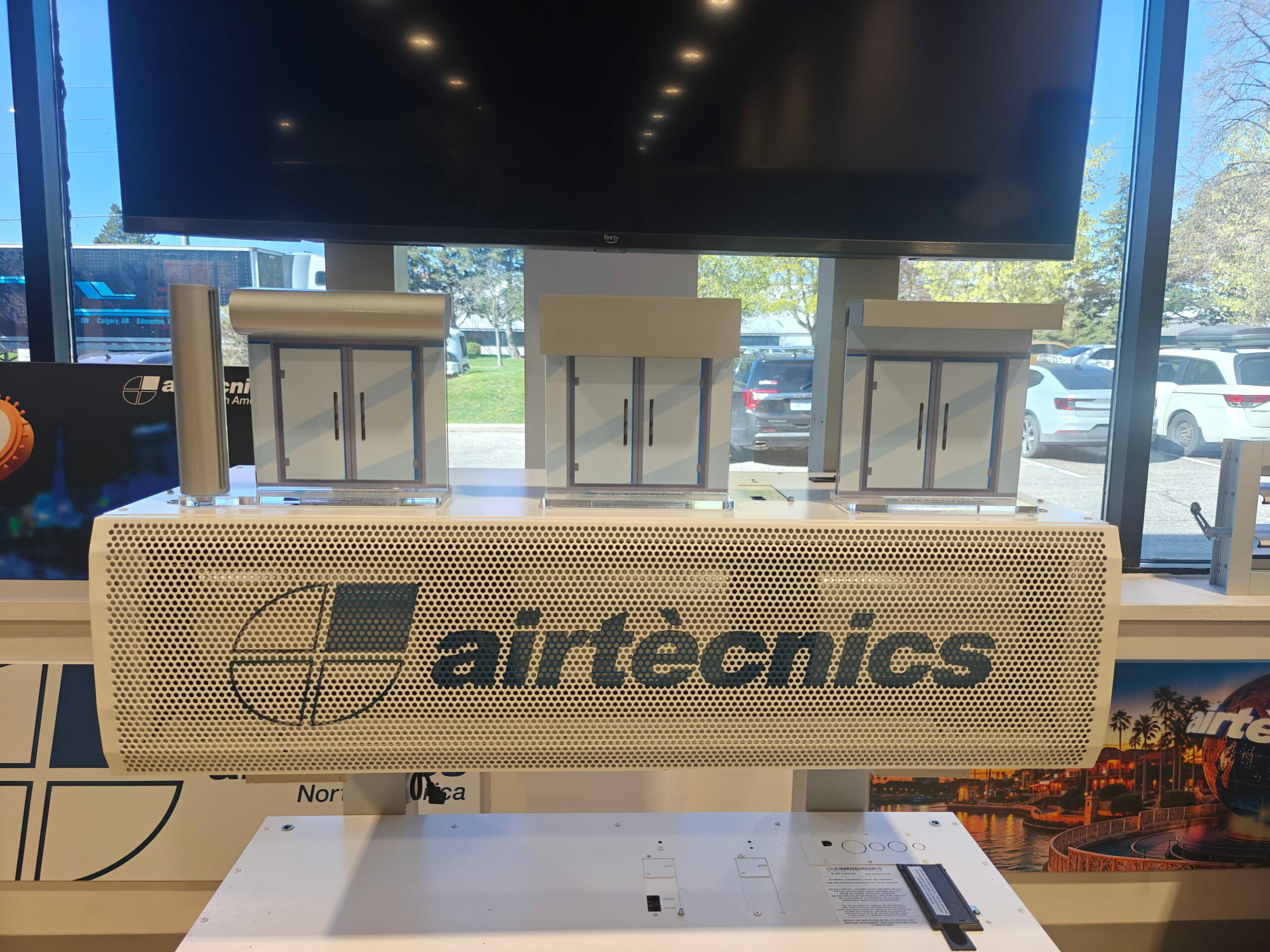
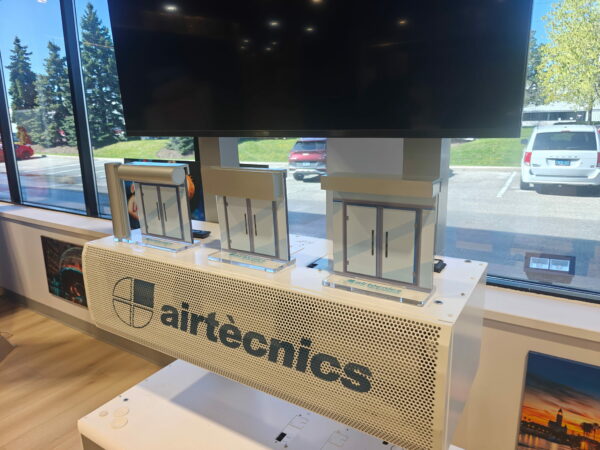
For this project, the goal was clear: design and fabricate a professional display piece that could represent Airtecnics North America’s products in a clean, compact, and visually engaging way. The final result was a branded display unit featuring detailed miniature product models, a custom base, precision-cut elements, painted components, and a completely assembled presentation piece that reflects the quality and engineering focus of the Airtecnics brand.
The process combined multiple manufacturing and finishing techniques, including laser cutting, base gluing, SLA 3D printing, painting, and final assembly. Each step played an important role in achieving a display that was not only functional but also polished enough for showroom, sales, trade show, and client presentation environments.
Understanding the Purpose of the Display Unit
A product display unit is more than a physical model. It is a communication tool.
For companies that manufacture or distribute technical products, a well-made display can help customers understand product design, scale, features, and brand identity in a way that digital images alone cannot. A display unit gives sales teams and marketing teams something physical to present. It allows potential clients to view a product concept up close, understand its form, and connect with the brand through a professional visual experience.
Airtecnics North America’s work is centered around air curtains and air door systems. These products are typically installed in commercial and industrial environments to help separate indoor and outdoor air, support energy efficiency, and improve comfort in buildings. Airtecnics North America describes its solutions as high-performance air curtains and air door systems engineered for commercial and industrial applications.
Because of the technical nature of these products, the display needed to communicate precision, durability, and innovation. That meant every visible detail mattered: the proportions of the units, the clean edges of the base, the finish of the painted parts, the alignment of the display components, and the final branding presentation.
Bringing Multiple Manufacturing Processes Together
One of the strengths of 3D Vector is its ability to combine different production methods into a single complete solution. This project was not just a 3D printing job. It required planning, fabrication, post-processing, surface finishing, and careful assembly.
3D Vector offers advanced 3D printing services, including SLA, SLS, DMLS, FDM, and related technologies for prototyping and manufacturing applications. The company also provides laser cutting services for precise, clean cuts across materials such as acrylic and metal, supporting custom solutions for industrial and creative projects.
For the Airtecnics North America display unit, we used a hybrid workflow that allowed us to take advantage of the best qualities of each process. Laser cutting provided clean, accurate flat components. SLA printing helped produce detailed model parts with fine surface quality. Painting gave the components a realistic and professional finish. Assembly brought everything together into a complete, branded display.
This kind of multi-process workflow is especially valuable for custom displays, because no single method can always achieve every requirement. Some parts need to be rigid and flat. Some need fine detail. Some need a smooth finish. Some need to be bonded securely. The key is knowing which process to use for each component and how to bring everything together into one cohesive final piece.
Step 1: Laser Cutting for Clean, Accurate Components
The first major stage of the project involved laser cutting.
Laser cutting is ideal for producing clean edges, repeatable shapes, and accurate parts for display bases, panels, supports, and structural details. For a branded display unit, precision is essential. Even small alignment issues can affect the overall appearance of the final piece.
In this project, laser cutting helped us create the foundation and supporting pieces for the display. These components needed to be accurate, stable, and visually clean. The display had to hold several miniature product models and branding elements, so the base structure needed to be both strong and neat.
A clean laser-cut component also reduces the amount of finishing required later. When edges are cut accurately and consistently, the final assembly becomes smoother, faster, and more reliable. That matters when creating a professional presentation unit where every line and edge is visible.
Laser cutting also allowed us to work efficiently while maintaining a high level of quality. For custom display work, speed and precision both matter. Clients often need display units for events, showrooms, presentations, or sales meetings, so production timelines can be important. With laser cutting, we were able to create the base and structural pieces with the accuracy required for a polished final product.
Step 2: Gluing the Base
Once the laser-cut elements were prepared, the next step was gluing and building the base.
The base is one of the most important parts of a display unit. It supports the entire presentation, holds the models in place, and creates the first impression when someone sees the piece. For this project, the base needed to look professional while also providing enough strength for the assembled components.
Gluing may sound simple, but in custom fabrication it requires precision and patience. The adhesive process must be controlled to avoid visible marks, misalignment, or weak joints. Each section needs to be positioned correctly before the bond sets. The goal is to create a base that feels like one solid, intentional piece rather than a collection of separate parts.
For the Airtecnics display unit, the base also carried visual weight because it included branding and served as the platform for the miniature air curtain units. A clean, stable base helped give the entire project a showroom-quality appearance.
Step 3: SLA 3D Printing for Detailed Models
The next major part of the project was SLA 3D printing.
SLA, or stereolithography, is a resin-based 3D printing process known for producing detailed parts with smooth surfaces and high accuracy. 3D Vector describes SLA printing as a high-precision process suitable for intricate parts, tight tolerances, and detailed visual prototypes.
This made SLA the right choice for the miniature product models in the Airtecnics display. The models needed to show clean geometry, sharp details, and accurate proportions. Since these components would be viewed up close, surface quality was very important.
SLA printing is especially useful for display models because it can capture fine details that may be difficult to achieve with other manufacturing methods. It also provides a surface that can be sanded, primed, and painted to a professional finish.
For this project, the printed components represented the product forms in a compact and visually understandable way. The goal was not just to create small objects, but to create representations that looked intentional, accurate, and aligned with the Airtecnics North America brand.
Step 4: Surface Preparation and Painting
After the SLA parts were printed, the next step was finishing.
Raw 3D printed parts often need post-processing before they are ready for display. This can include cleaning, curing, sanding, priming, and painting. The finishing stage is where a technical part becomes a presentation-quality part.
Painting was especially important for this display unit because the models needed to look refined and realistic. The finish had to be clean, consistent, and appropriate for a professional product showcase. A good paint job helps communicate quality. It makes the model feel complete and gives the display a more polished appearance.
During this stage, our team focused on achieving smooth surfaces, clean color separation, and a finish that matched the visual direction of the project. The display needed to look modern and precise, supporting Airtecnics North America’s brand image.
Painting also helps unify parts produced through different processes. Laser-cut pieces and SLA-printed pieces may have different raw material appearances, but careful finishing can bring them into one cohesive visual language.
Step 5: Final Assembly
The final stage was assembly.
This is where every previous step comes together. The laser-cut base, glued structure, SLA-printed models, painted components, and branding elements all had to be aligned and secured.
Assembly requires attention to spacing, symmetry, and visual balance. On a display unit, even a small misalignment can be noticeable. The miniature product models needed to sit properly on the base, the branding needed to be visible, and the overall layout needed to feel balanced.
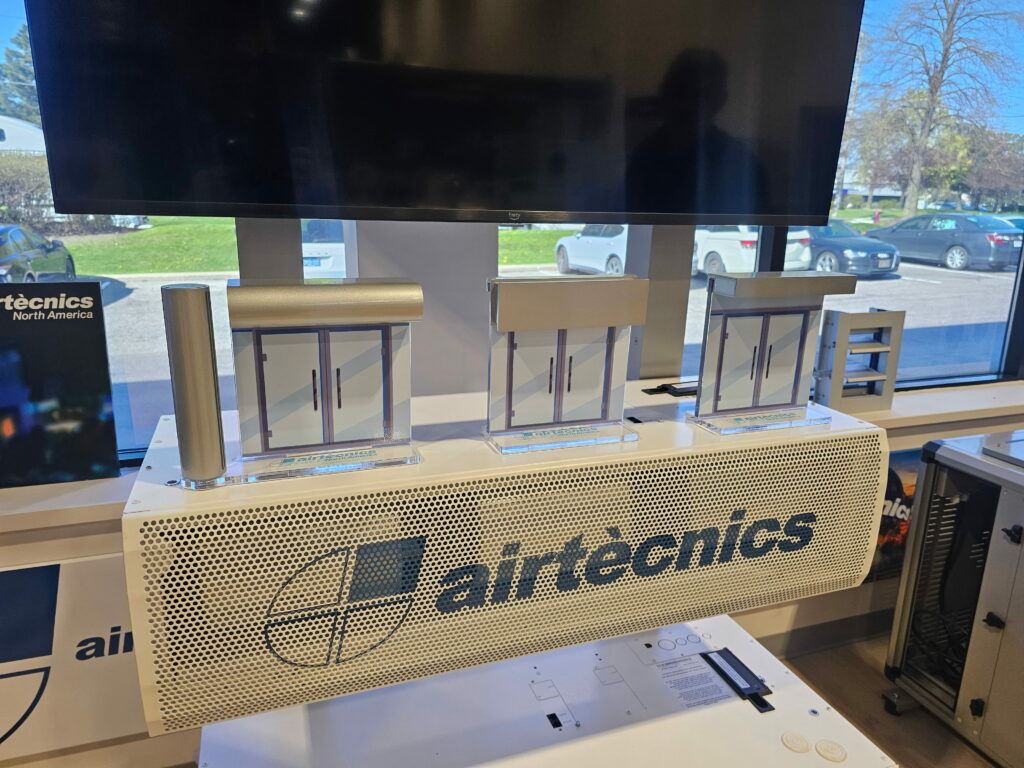
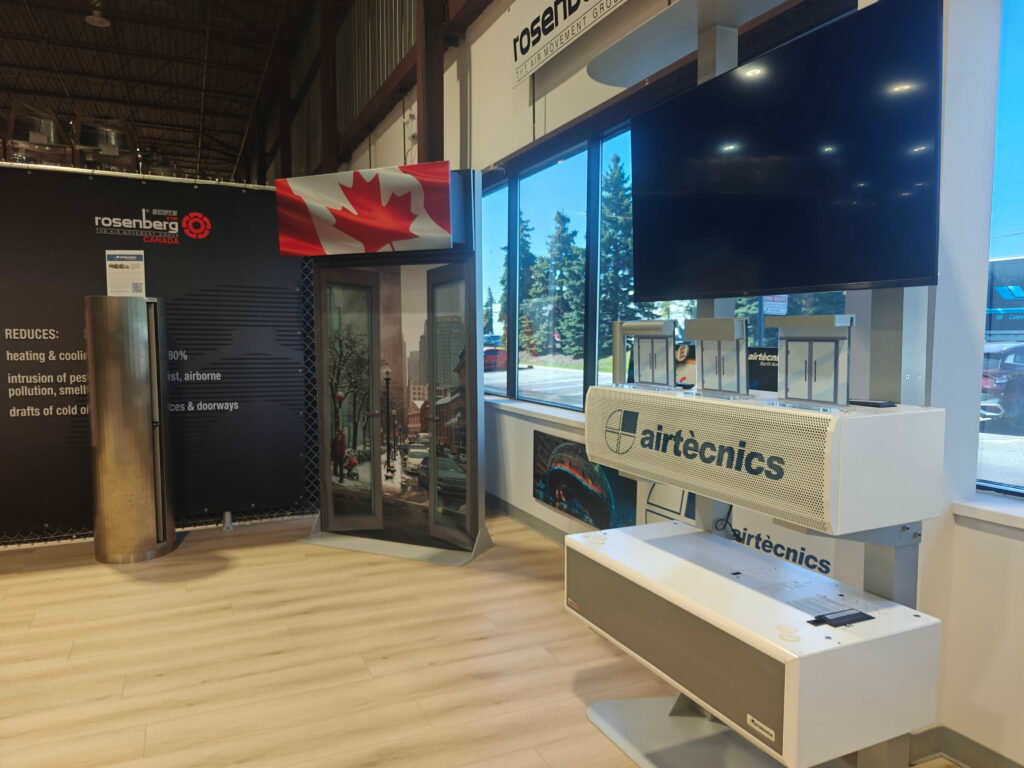
The finished display unit included multiple miniature Airtecnics-style product models arranged on a custom base, with the Airtecnics branding presented clearly across the front. The final piece was designed to be visually strong from a distance while still offering detailed craftsmanship up close.
The result was a custom display that represented both the technical nature of Airtecnics North America’s products and the fabrication capabilities of 3D Vector.
Why Custom Display Units Matter
In industries where products are technical, large, or installed in real-world environments, it can be difficult to show customers exactly what makes a product valuable. Photos, brochures, and videos are useful, but they do not always create the same connection as a physical model.
A custom display unit gives businesses a practical sales and marketing asset. It can be used at trade shows, inside showrooms, during client meetings, or as part of a product demonstration. It helps simplify technical conversations and makes the product more memorable.
For Airtecnics North America, a physical display unit can help communicate product design and brand presence in a compact format. Instead of relying only on full-size installations or digital visuals, the company now has a tangible piece that can support customer engagement.
For 3D Vector, this project is a strong example of how digital manufacturing, fabrication, and finishing can work together to create something functional and visually compelling.
The 3D Vector Advantage
At 3D Vector, we believe that great results come from choosing the right process for the right purpose. Some projects require speed. Others require fine detail. Some require strength, while others require visual quality. Many projects, like this Airtecnics North America display unit, require all of these elements working together.
Our team brings experience in 3D printing, laser cutting, design, finishing, and assembly. 3D Vector’s capabilities include 3D design, 3D printing, rubber casting, finishing, scanning, and reverse engineering, supporting a wide range of prototyping and manufacturing needs.
This combination of services allows us to support clients from idea to finished product. Whether the goal is a prototype, a display model, a presentation piece, a custom component, or a production-ready part, our team can help select the right materials and methods to bring the project to life.
The Airtecnics North America project demonstrates the value of a complete fabrication workflow. Laser cutting gave us precision. Gluing created a clean base structure. SLA printing delivered detailed parts. Painting added realism and professionalism. The assembly transformed separate components into a finished, branded display.
Turning Ideas Into Professional Displays
The custom Airtecnics North America display unit is a great example of what happens when creativity, engineering, and craftsmanship come together.
From the first cut to the final assembly, every stage of the process was focused on quality, detail, and presentation. The finished display reflects the professionalism of Airtecnics North America while showcasing 3D Vector’s ability to produce custom, high-quality visual models and display solutions.
For companies looking to present their products more engagingly, a custom display unit can be a powerful tool. It helps tell the story of a product, supports sales conversations, and creates a memorable brand experience.
At 3D Vector, we are proud to help businesses transform concepts into physical, presentation-ready pieces. Whether it is a detailed prototype, a product model, a custom display, or a fully finished visual asset, our team is ready to bring ideas to life with precision and creativity.
Ready to create a custom display, prototype, or product model for your business? Contact 3D Vector today and let’s build something exceptional together.